
If you’re buying or selling a home in 2026, you’ve likely come across an Energy Performance Certificate (EPC). It’s a standard document in UK property transactions but for many buyers, it’s often misunderstood or overlooked.
In reality, an EPC can tell you far more than just a rating. It offers valuable insight into running costs, energy efficiency, and future improvements, all of which can influence your decision when choosing a home.
At S J Smith Estate Agents, we help buyers across Surrey, including Ashford and Staines, understand what really matters when reviewing an EPC.
In this guide, we break down how to read an EPC certificate and what you should actually focus on when buying a property.
What Is an EPC Certificate?
An EPC is a document that shows how energy efficient a property is, using a rating scale from A (most efficient) to G (least efficient).
It’s legally required when a property is:
- Sold
- Rented
- Newly built
The certificate is valid for 10 years and includes:
- An overall energy rating
- Estimated energy costs
- Recommendations for improvement
- Environmental impact information
While it may seem technical, understanding the key sections can help you make a more informed buying decision.
The EPC Rating: What Does It Really Mean?
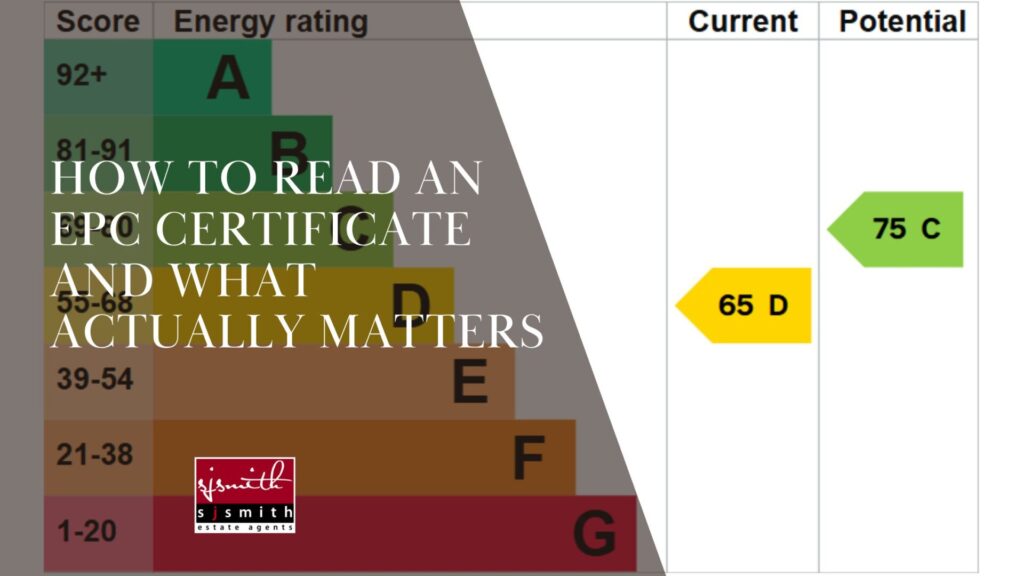
The most visible part of an EPC is the rating, displayed as a coloured bar chart.
- A–B: Highly efficient, lower energy costs
- C–D: Average efficiency (common for many UK homes)
- E–G: Less efficient, potentially higher running costs
While it’s easy to focus on this headline rating, it’s important not to judge a property solely on this figure.
For example:
- A period property may have a lower rating but strong character and value
- A modern flat may have a higher rating but higher service charges
The EPC rating is a useful guide, but not the full picture.
Estimated Energy Costs: A Key Section Buyers Often Miss
One of the most valuable parts of an EPC is the estimated energy cost section.
This shows:
- Typical annual energy costs
- Potential savings if improvements are made
For buyers, this is often more practical than the rating itself. It gives a clearer idea of what you might actually spend on heating, lighting, and hot water.
In 2026, with energy costs still a consideration for many households, this section is increasingly important when comparing properties.
Recommended Improvements: What Should You Pay Attention To?
EPCs include a list of suggested improvements, such as:
- Installing loft or wall insulation
- Upgrading to double or triple glazing
- Replacing an old boiler
- Adding solar panels
These recommendations are split into:
- Low-cost improvements
- Higher-cost, long-term upgrades
As a buyer, you should consider:
- Which improvements are realistic
- The cost versus potential savings
- Whether the work aligns with your long-term plans
A lower-rated property with clear, achievable upgrades may offer better value than a higher-rated home with little room for improvement.
Environmental Impact: Why It Matters More in 2026
EPCs also show a property’s carbon emissions rating.
While this was once a secondary consideration, it’s becoming increasingly relevant due to:
- Growing environmental awareness
- Potential future government regulations
- Buyer demand for sustainable homes
Energy-efficient homes are likely to become more desirable over time, which can influence both resale value and long-term appeal.
What Buyers Should Really Focus On
When reviewing an EPC, focus on the following:
1. Running Costs
Look at estimated annual costs rather than just the rating. This gives a more realistic view of affordability.
2. Improvement Potential
Can the property be upgraded easily and cost-effectively? This can significantly impact long-term value.
3. Heating System Efficiency
Older boilers or inefficient systems can increase costs. Check whether upgrades are recommended.
4. Insulation Levels
Good insulation improves comfort and reduces bills. Poor insulation may require additional investment.
5. Property Type and Age
Older properties often have lower EPC ratings but may offer space, character, and location benefits that outweigh efficiency concerns.
EPCs and Property Value
Energy efficiency is becoming a bigger factor in property value.
Homes with higher EPC ratings may:
- Attract more buyers
- Sell faster
- Command stronger prices
However, this doesn’t mean lower-rated properties lack value. Buyers are often willing to invest in improvements if the property offers:
- Good location
- Strong layout
- Long-term potential
At S J Smith Estate Agents, we help buyers balance these factors to find the right property for their needs.
EPCs for Sellers: What You Need to Know
If you’re selling your home:
- An EPC is legally required before marketing
- A stronger rating can improve buyer perception
- Simple upgrades (like insulation or lighting) may boost your score
Even small improvements can make your property more attractive in a competitive market.
Common EPC Misconceptions
“A low EPC rating means a bad property”
Not necessarily. Many desirable homes, particularly period properties, have lower ratings but strong market demand.
“A high EPC means low overall costs”
Not always. Other factors such as service charges or location can still influence affordability.
“You must complete all recommended improvements”
EPC recommendations are guidance, not requirements.
How EPCs Fit Into the Buying Process
An EPC should be viewed alongside other key factors, including:
- Location
- Property condition
- Layout and space
- Long-term potential
It’s one piece of the puzzle but an increasingly important one.
Final Thoughts
Understanding how to read an EPC certificate can give you a clearer picture of a property’s true running costs, efficiency, and potential.
In 2026, buyers are more informed than ever, and energy performance is playing a bigger role in decision-making.
By focusing on what actually matters: costs, improvements, and long-term value, you can make smarter, more confident property choices.
At S J Smith Estate Agents, we’re here to guide you through every detail, helping you find a home that works both financially and practically.
Get in touch with our team here for expert advice on buying in Ashford and Staines.